
Volatility in the external environment is also reshaping how reputation functions operate internally.
Almost two-thirds of reputation leaders told us they are part of teams that are evolving in some way, either under review or actively shifting the balance of central vs local control. The most common shift among those who say they are changing structure is toward greater centralisation, accounting for half of the structural shifts.
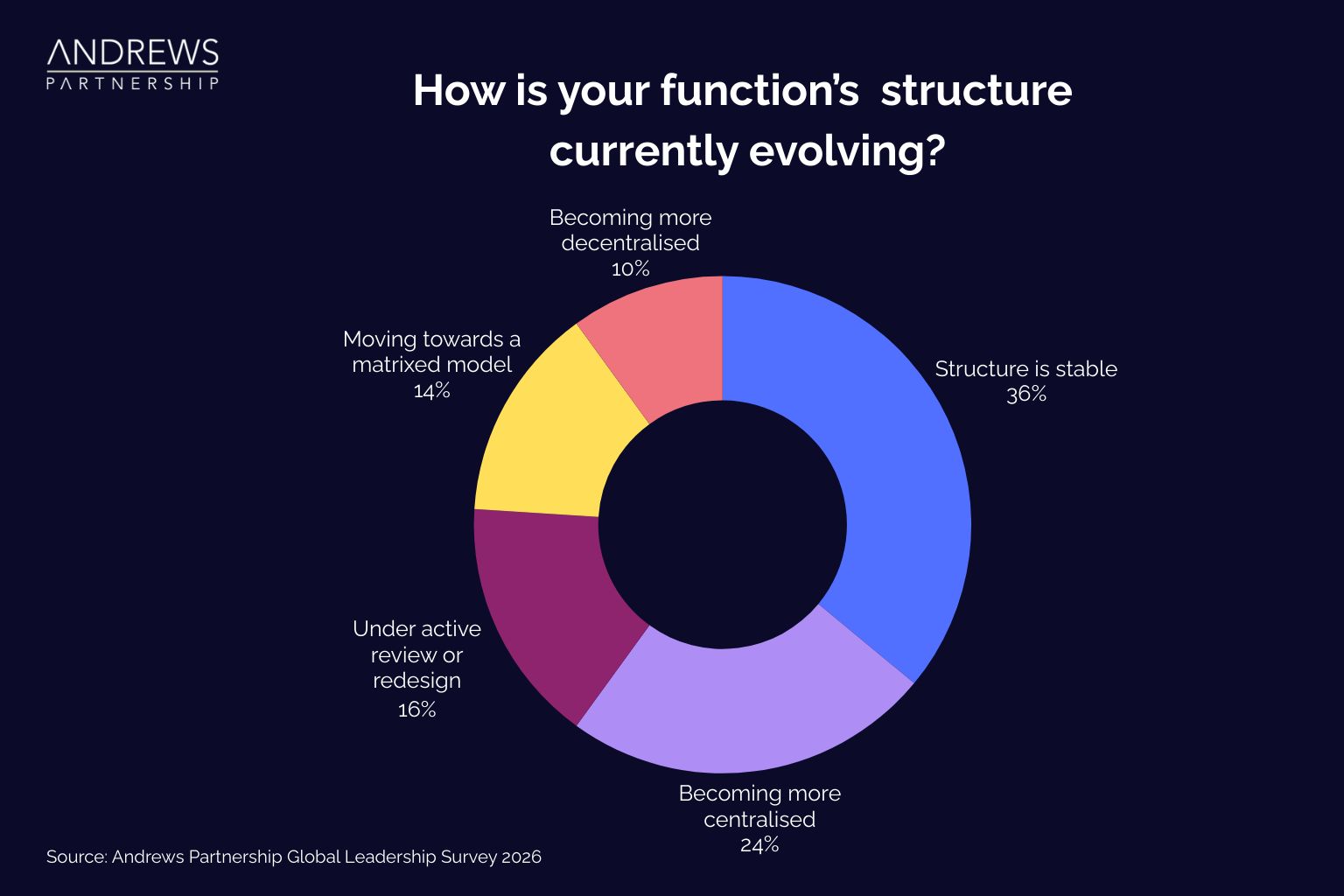
For the 16% of leaders whose functions are currently under an active review or redesign, organisational uncertainty will no doubt be compounding the pressures created by external disruption.
It’s clear that many reputation leaders are navigating two layers of change simultaneously: adapting to a global polycrisis while their own teams and reporting structures evolve around them.
Survey responses suggest two main forces are driving this structural movement.
The first is geopolitical complexity, cited by 43% of respondents as one of the top factors shaping the profession in 2026. Tariffs, trade tensions and regulatory agendas increasingly require coordinated responses across markets, strengthening the case for more centralised oversight of reputation and public affairs activity.
In AP’s research on how reputation leaders are responding to changes in tariffs, one government affairs leader warned that purely local reporting structures can dilute attention to geopolitical risk, noting that “If you report only to the country, it tends to focus more on the sales and commercial side. They’re not well-versed in these issues and don’t give adequate attention to them.”
Others emphasised the importance of organisational structures that allow leaders to align quickly across functions and markets. As a Singapore-based professional services leader observed, “Successful leadership will be defined by turning fast-changing geopolitical, regulatory and reputational risk into clear commercial decisions – aligning leadership, stakeholders and teams to execute with speed and credibility across markets.”
The second driver is economic pressure, the second-highest rated factor impacting leaders in 2026, cited by 47% of respondents. Geopolitical shifts such as tariffs and supply chain disruption are already feeding through into cost pressures for many organisations, increasing scrutiny of budgets and headcount across functions.
Several respondents described growing pressure to streamline and demonstrate the strategic value of reputation teams. An APAC-based corporate affairs leader in financial services identified the biggest challenge for 2026 as “Retaining talent, maintaining headcount [and] not being downsized.”
Similarly, a European communications leader in professional services pointed to the tension between rising expectations and constrained resources, noting the challenge will be “Being able to maintain a high level of service with stretched teams fighting for their worth over AI.”
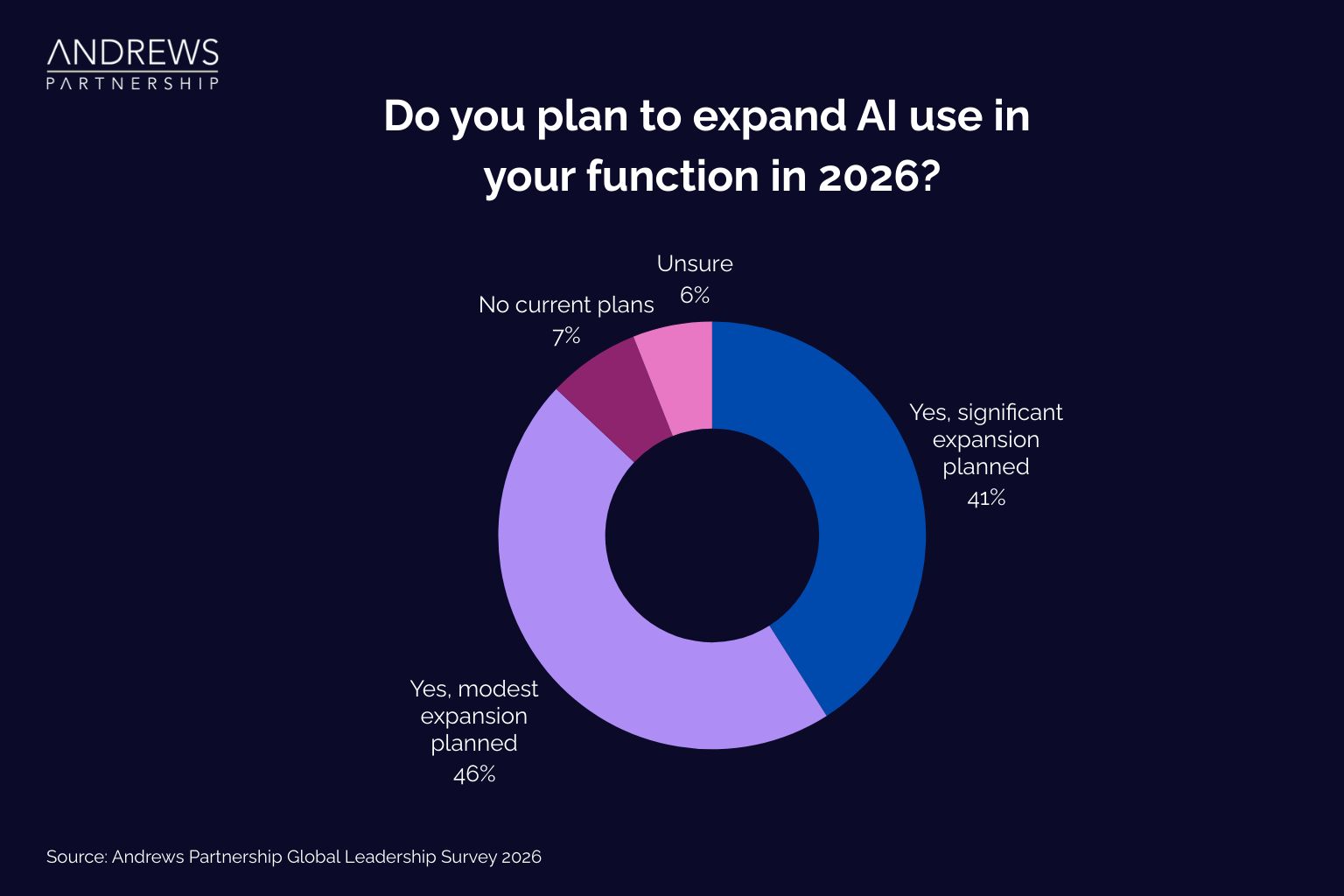
Alongside structural change, reputation teams are rapidly integrating AI into their work, with 91% of respondents saying their teams are using AI tools. Adoption across the profession is now widespread and the verdict on impact is positive: 95% describe AI as having a beneficial impact on their effectiveness, with only a handful reporting neutral or negative outcomes.
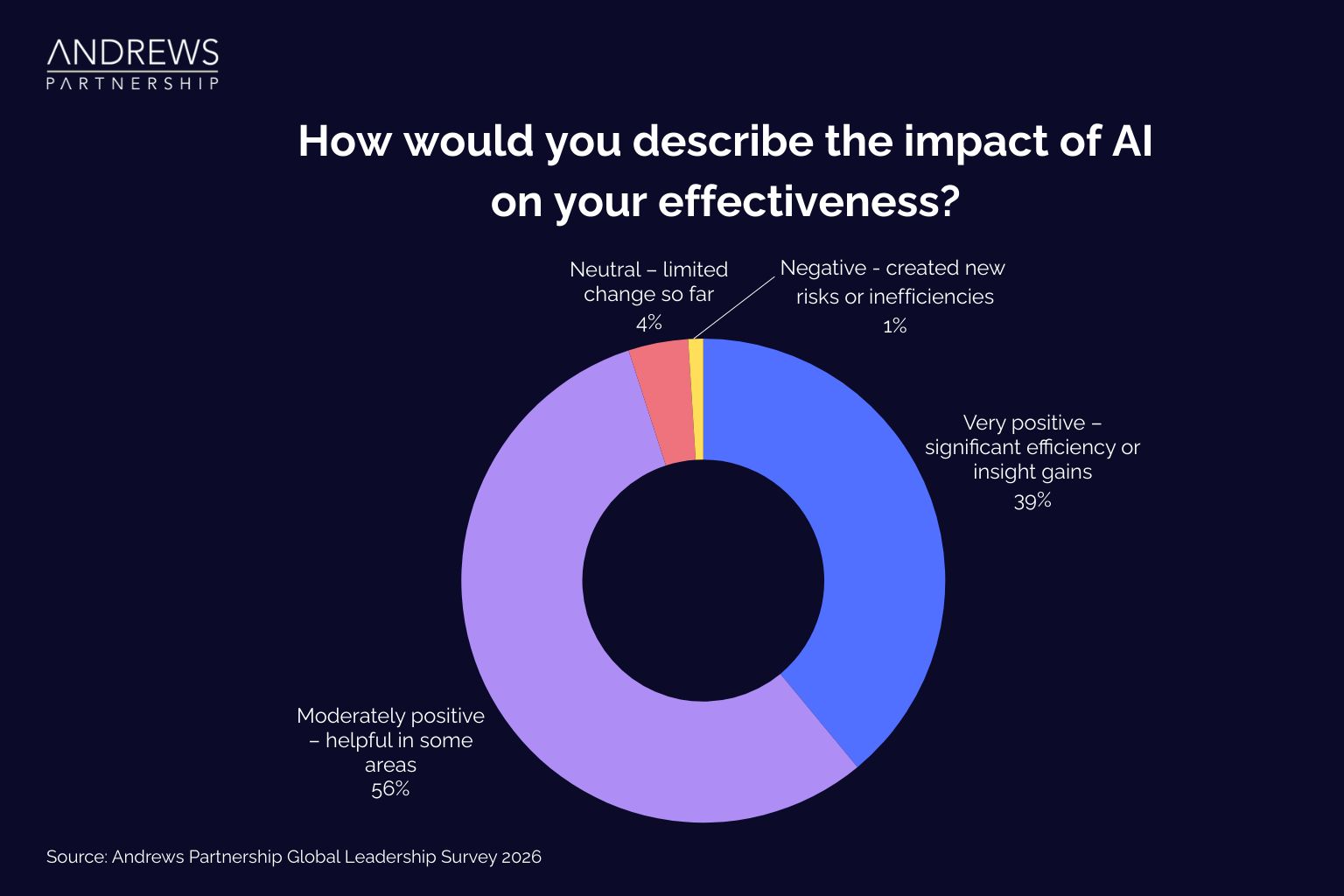
Unsurprisingly, almost 9 out of 10 respondents said they planned to expand AI usage in 2026, with 41% saying the expansion would be significant.
When it comes to how AI is being used, the data reveals a profession mid-transition: AI has taken hold most firmly in the activities where volume and speed create the greatest pressure. Content creation and editing leads adoption at 88%, reflecting the relentless demand for material across channels – but perhaps also raising a question about where human editorial judgment now sits in the workflow.
Media monitoring and reporting and optimisation follow, with each at 60%, suggesting that AI is increasingly shaping not just what teams produce, but how they measure and explain their impact to leadership.
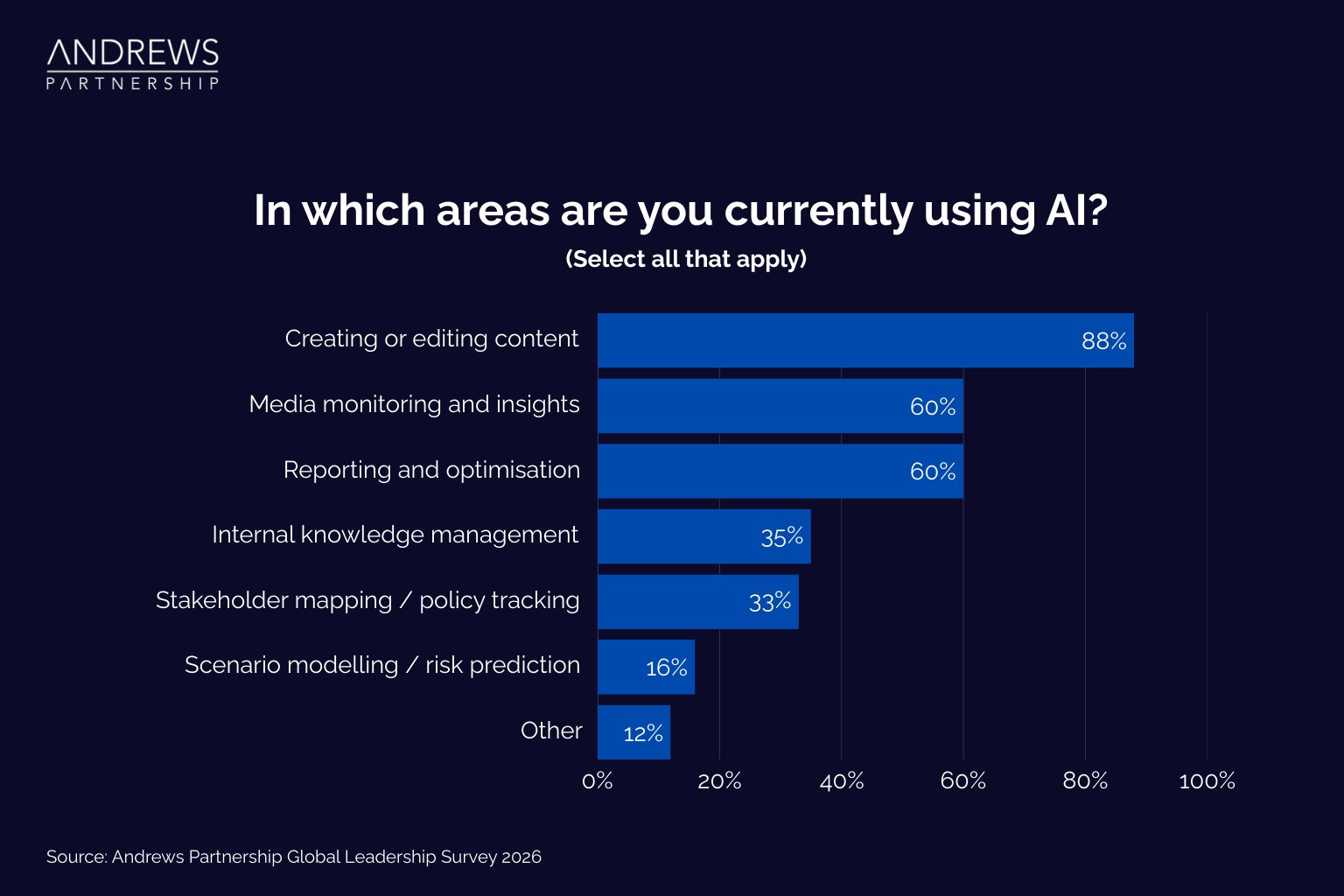
Less mature, but more telling, is where adoption remains low. Only 16% are using AI for scenario modelling and risk prediction – the activity most directly connected to the strategic value that reputation functions must offer. Stakeholder mapping and policy tracking sits at 33%. These underleveraged areas are precisely where AI could most credibly elevate communications from an execution function to a genuine intelligence function.
The “other” responses from respondents add further texture: leaders are beginning to use AI as a thinking partner – to stress-test ideas, critique drafts and model executive communications – pointing to an emerging use case that sits above task automation.
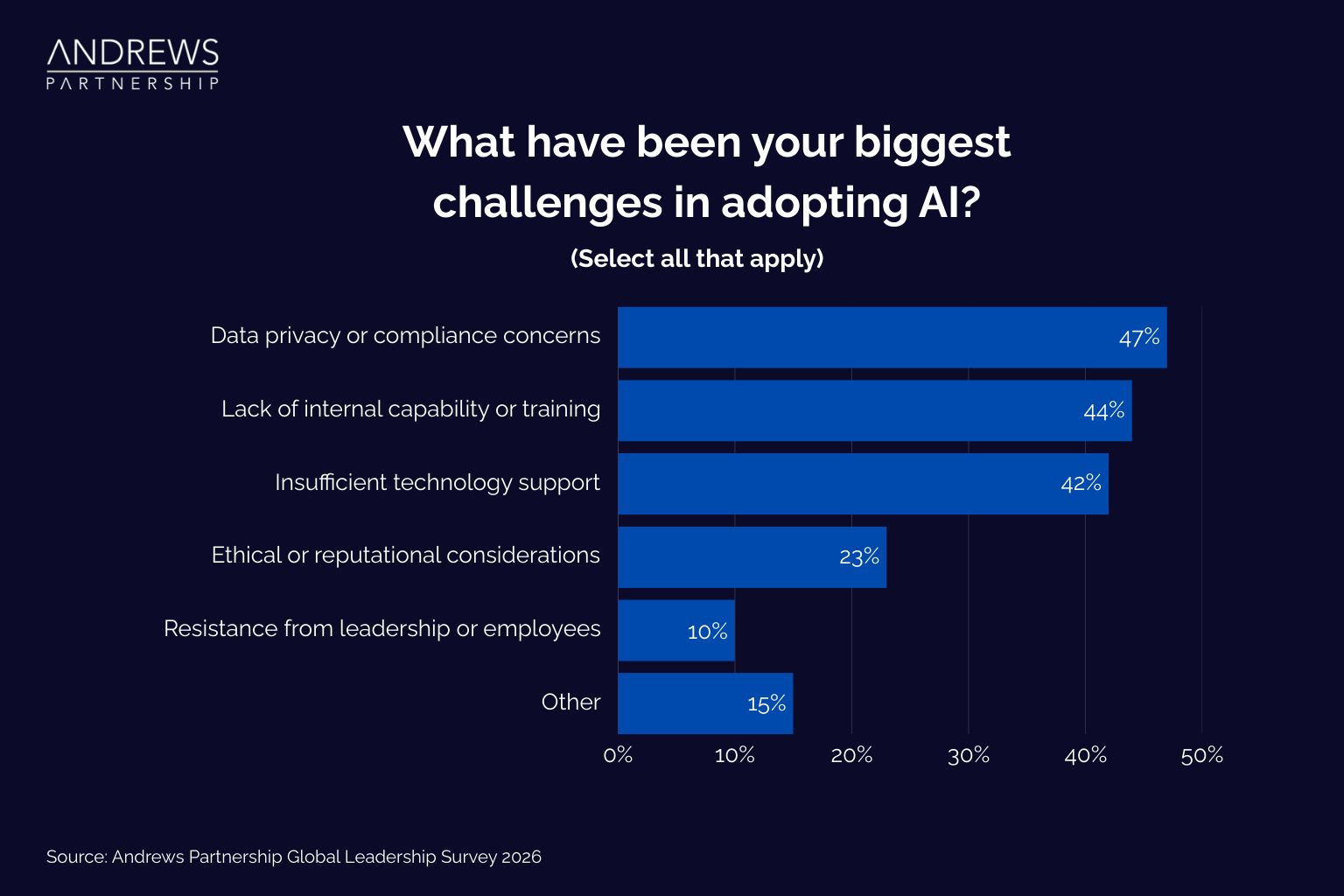
Despite widespread adoption, respondents highlighted significant challenges associated with deploying AI effectively.
Governance remains a major concern. An APAC-based leader in the technology sector described the situation bluntly: “Many orgs are waiting on proprietary internal tools and policies, but in the meantime have to rely on improperly governed public LLMs. It’s like the Wild West of ‘digital’ all over again.”
Others raised concerns about poor implementation. A China-based communications lead in financial services warned of “People embracing bad AI writing, not checking AI-generated work adequately or blindly trusting it.”
These concerns are reflected in the survey data: data privacy and compliance, lack of internal capability or training and insufficient technology support are the most commonly cited barriers – pointing to a profession where adoption has outpaced the infrastructure, skills and governance needed to support it.
Perhaps most strikingly, many respondents emphasised that technology alone will not dominate the future of the profession. An APAC-based communications leader in the media industry described the challenge as “Finding the sweet spot between human and artificial intelligence that is complementary and symbiotic.”
Others warned that misuse of the technology can expose weaknesses in professional capability. As a European corporate affairs leader in finance put it, the risk lies in “The misuse of it by people who do not have the basic writing skills and cannot contextualise the core message or link it to the overarching strategy.”
Another respondent highlighted the importance of human judgement, describing her major challenge in 2026 as convincing leaders that “with a huge focus on AI, empathy must still guide decision making.” In other words, while AI may transform workflows, it is also increasing the premium on the human capabilities that technology cannot replicate.