Influence in the age of AI

Four shifts shaping reputation leadership in 2026

Managing Partner, Andrews Partnership

Introduction: Seizing opportunity amidst disruption

Reputation leaders are navigating an era of extraordinary complexity. Geopolitical instability, structural upheaval and technological change are arriving faster than most organisations can absorb. AI is reshaping how functions operate, what teams are expected to deliver and what it means to lead.

And yet what strikes me most about our survey findings this year is not the uncertainty they reveal, but the level of confidence that sits alongside it. This is a profession that is not just surviving disruption but leading through it.
The four shifts we identify in this research – in the external environment, in function design, in boardroom influence and in the human skills that will define the next generation of leaders – together tell a story of an industry whose strategic value has never been greater. Two thirds of respondents told us they expect their influence to grow. Many are sitting in boardrooms they would not have entered a few years ago. And the more AI takes on, the more organisations are looking to their reputation leaders for what technology cannot provide: judgement, influence and foresight.
Andrews Partnership turns ten this year. Over that time, we have worked alongside reputation leaders at the most important moments of their careers and we have never been more excited about what lies ahead for the profession. We created this research to give you both the data and the confidence to seize the moment – because for ambitious reputation leaders, the moment has never been bigger.

About our survey

01

Shift 1: Disruption is intensifying on multiple fronts

02

Shift 2: Functions are rebuilding around new structures and AI

03

Shift 3: Strategic reach and influence is growing

04

Shift 4: Leaders are doubling down on the skills AI cannot replicate

05

What reputation leaders must prioritise in 2026

06

Take the next step: Further reading and resources

07

About our survey

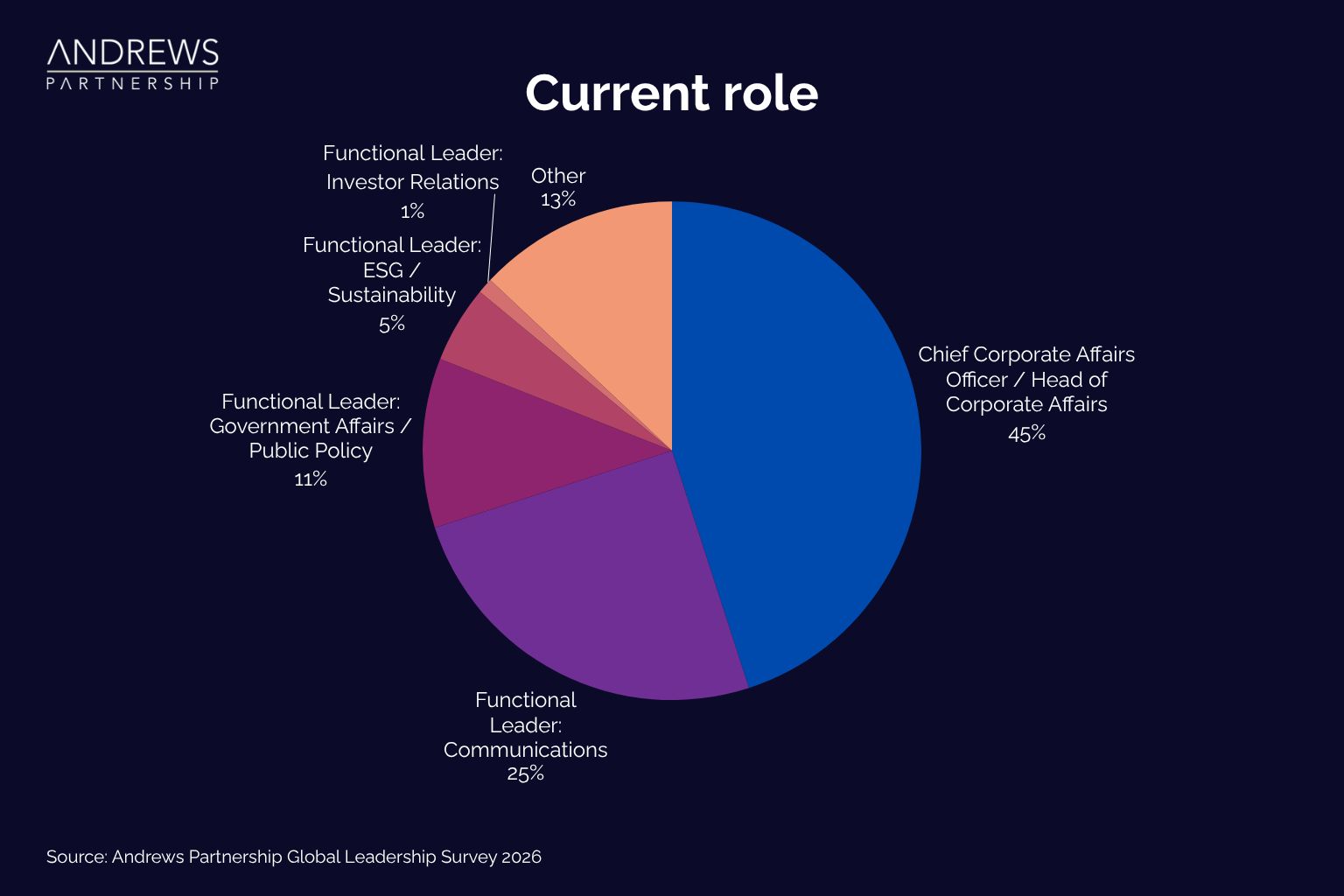
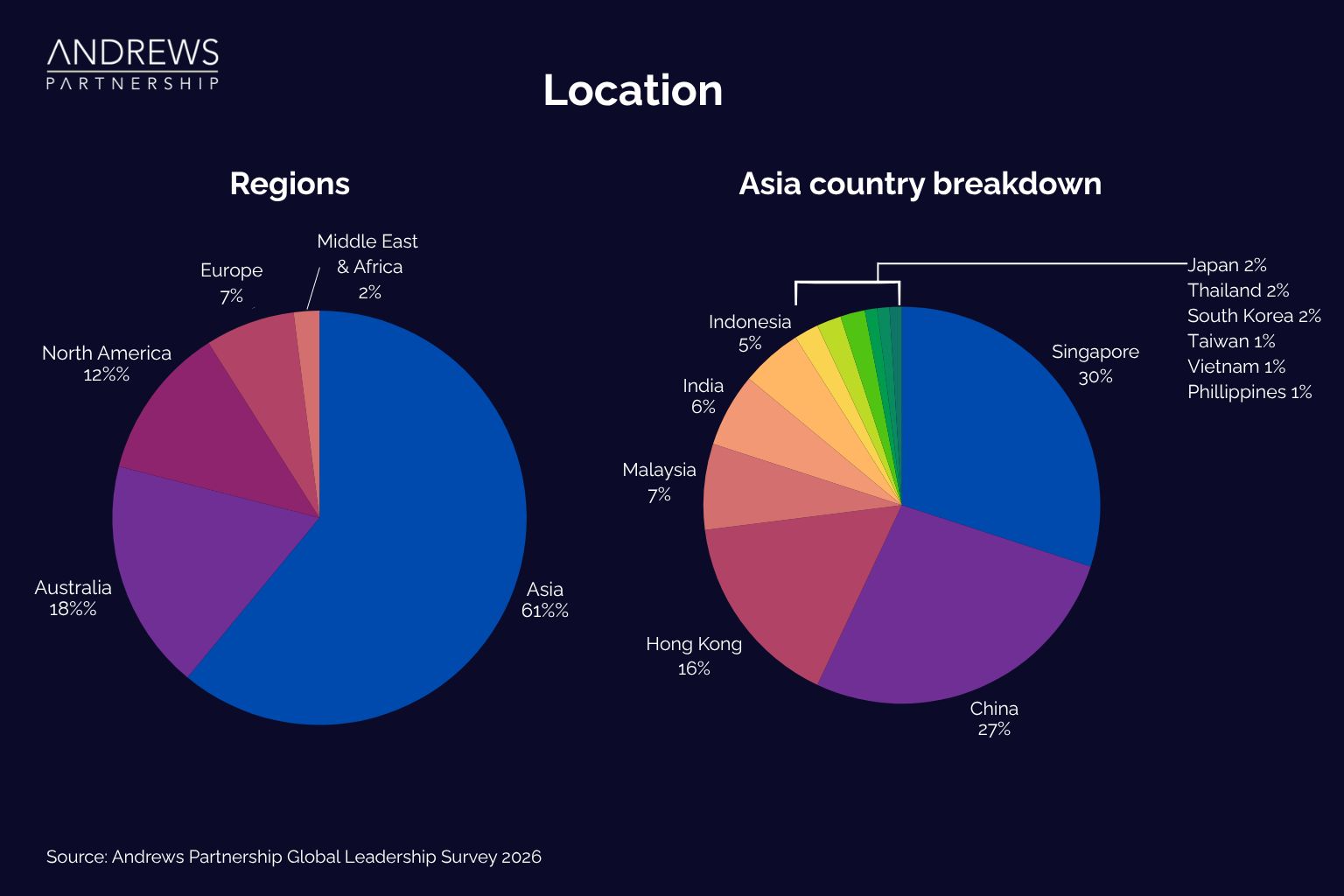
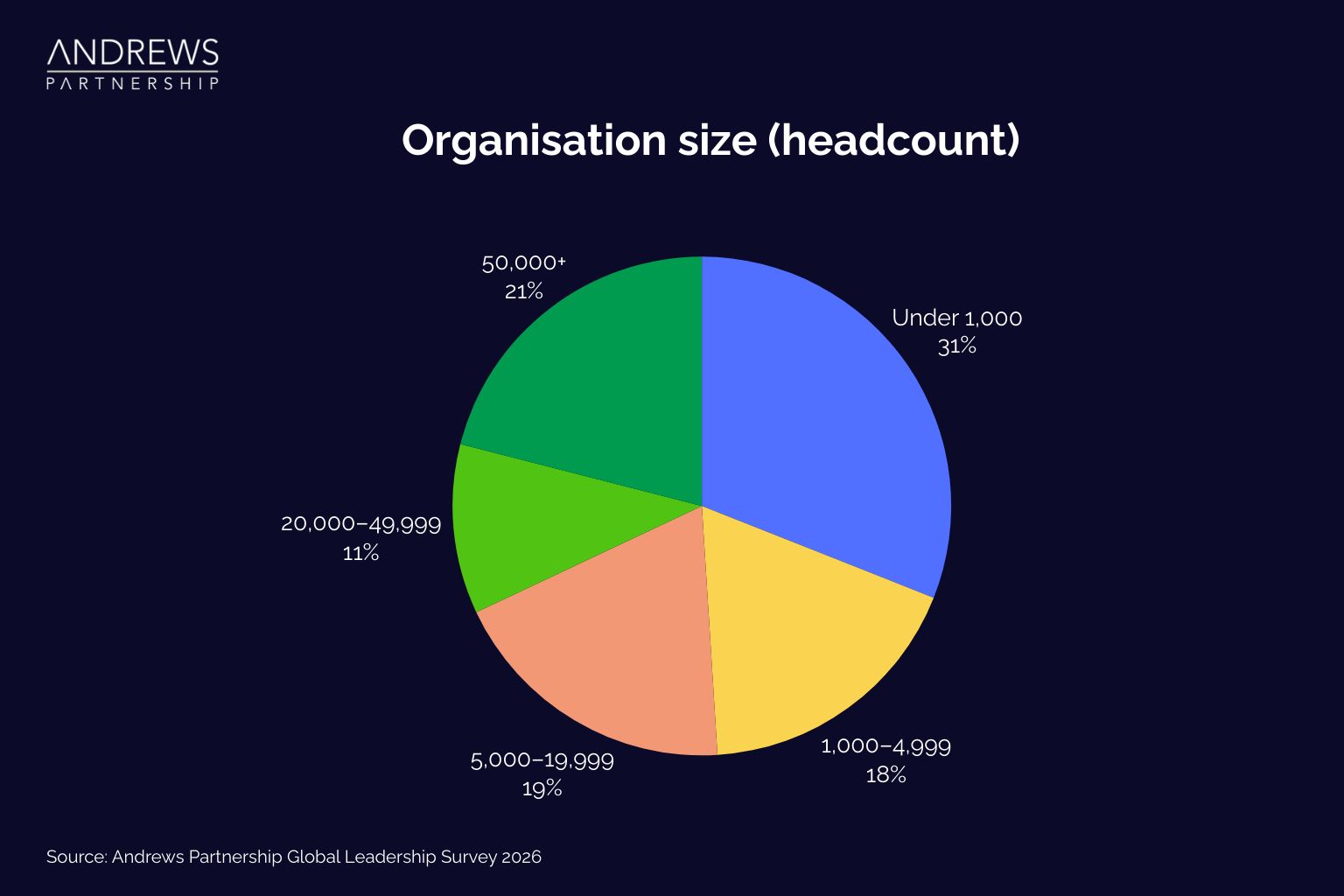
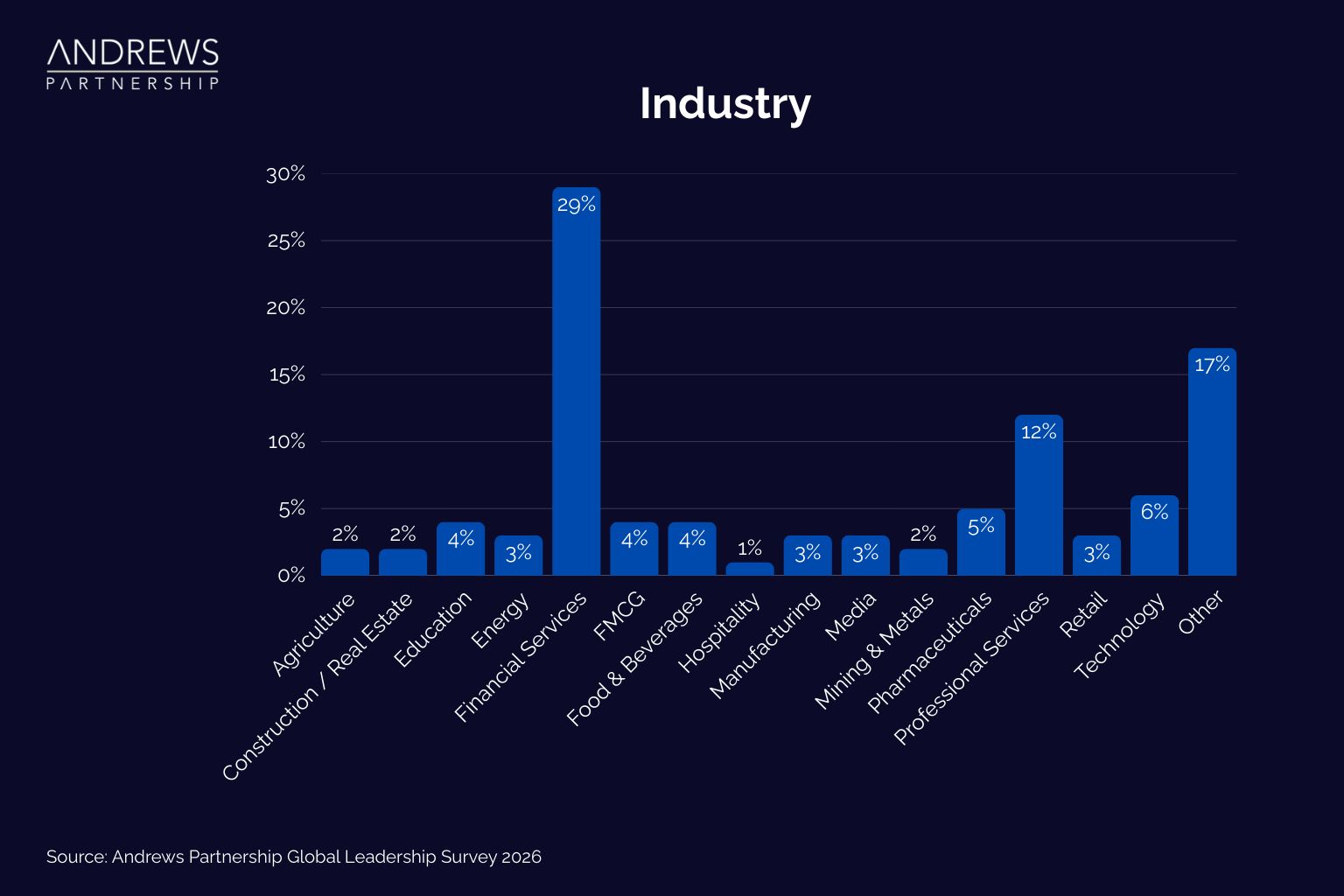
This research was conducted by Andrews Partnership in February 2026. A total of 171 senior reputation leaders participated, spanning corporate affairs, communications, government affairs and ESG functions, alongside respondents from HR, strategy and consulting. Participants represented a range of industries, organisation sizes and geographies.

Respondent demographics

AP 2026 survey current role
Organisation size
Industry
Influence-in-the-age-of-AI

Download a pdf version of the report

Shift 1: Disruption is intensifying on multiple fronts

Few roles sit closer to global disruption than reputation leadership in 2026. Trade tensions, tariffs and supply-chain shocks are reshaping geopolitical relationships. Regulatory agendas are shifting rapidly across markets. AI is colliding with geopolitics and public policy while also accelerating misinformation risks. And organisations are facing scrutiny from an ever-wider array of stakeholders.
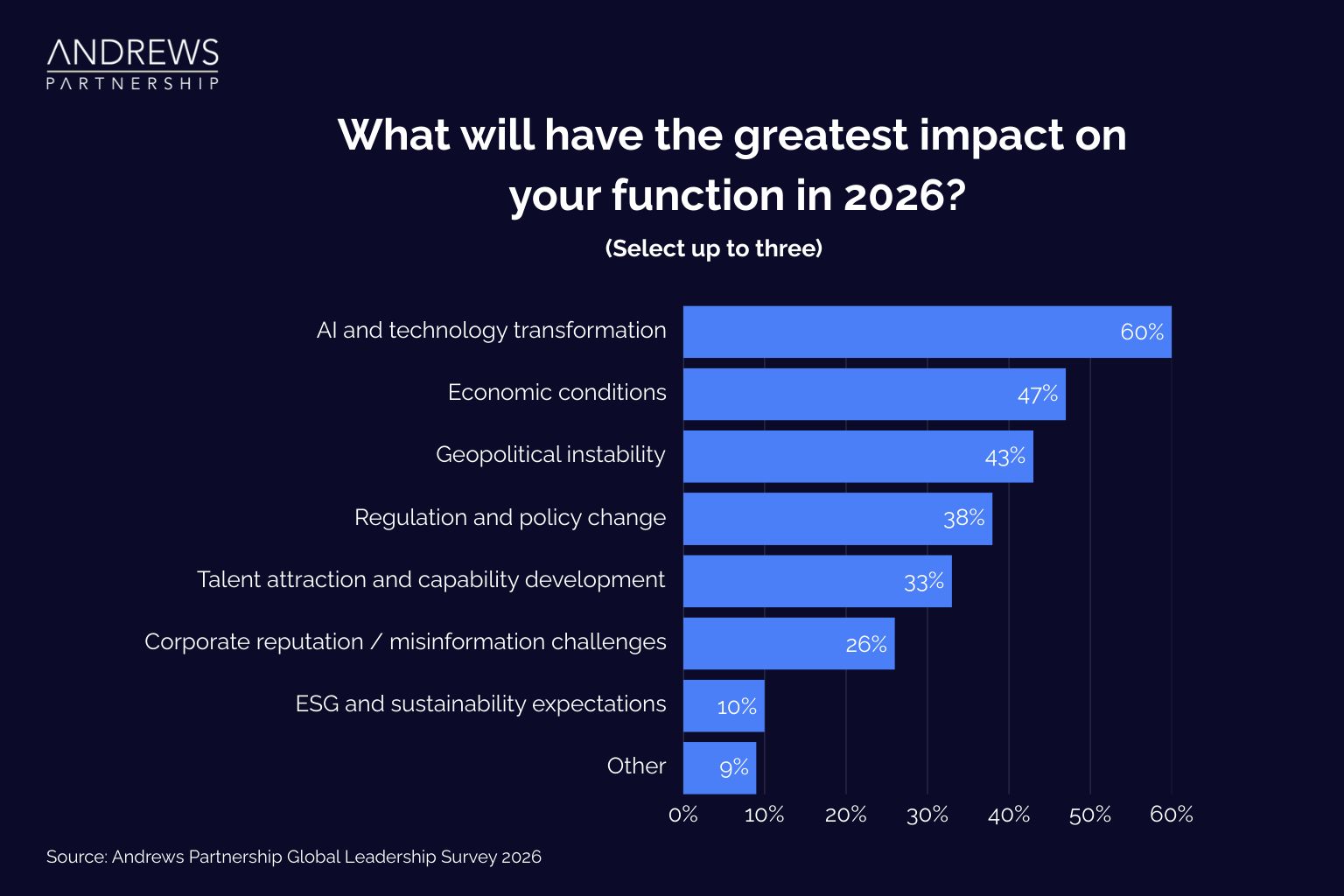
Our survey highlights the sheer breadth of forces now shaping the profession. AI tops the list of factors expected to influence reputation leadership in 2026, but it sits alongside a range of other powerful and shifting currents.
What will have the greatest impact on your function in
Rather than responding to a single dominant issue, reputation leaders must manage a wide spectrum of risks and opportunities, often unfolding across multiple regions and stakeholder groups at once.
At AP, we describe this environment as one of polycrisis: a landscape in which geopolitical tensions, economic pressures, regulatory developments and technological disruption interact and reinforce one another.
A regulatory announcement can influence market sentiment, geopolitical developments can trigger policy changes and technological breakthroughs can reshape investor expectations almost overnight.

Agility and calm amidst volatility

Respondents repeatedly highlighted the need for adaptability and composure in the face of continuous change. An APAC-based communications leader in the technology sector captured this tension succinctly: “There is a lot of industry volatility with every AI announcement impacting share price. Staying calm, confident and above the fray is the way to win.”
Or as one respondent put it: “Get comfortable with being uncomfortable.” Others emphasised the need for “nimbleness to pivot according to fluid changes” and the ability to respond to a “volatile and changing landscape and economy.”
But operating in this environment can also place considerable pressure on leaders themselves. Several respondents referenced the personal demands of navigating continuous disruption, including “burnout, and keeping ahead of the AI curve.” One respondent summarised the reality more bluntly: successful leadership increasingly means “staying calm amidst utter chaos.”

As we’ve explored in our work on resilience in the industry, the ability to remain agile, composed and provide clear counsel amid uncertainty is becoming a critical leadership capability.

Faced with a permanently complex operating environment, many leaders are rethinking not just the need for personal resilience, but how to build resilience into their function design and capabilities. Our survey shows that teams are already responding – adopting new technologies and reconsidering organisational structures to better navigate the pressures shaping the profession.

Shift 2: Functions are rebuilding around new structures and AI

Volatility in the external environment is also reshaping how reputation functions operate internally.
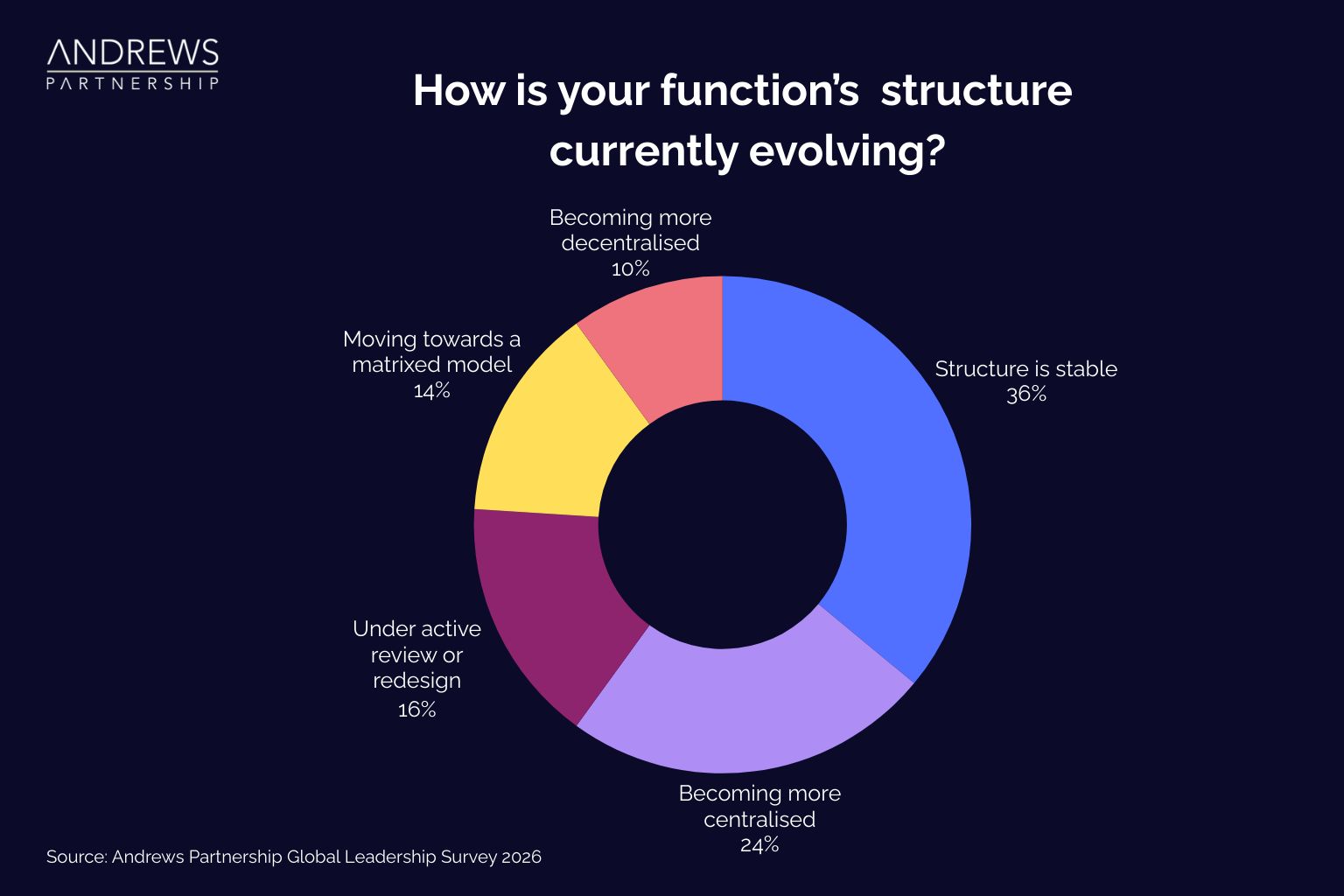
Almost two-thirds of reputation leaders told us they are part of teams that are evolving in some way, either under review or actively shifting the balance of central vs local control. The most common shift among those who say they are changing structure is toward greater centralisation, accounting for half of the structural shifts.
structure currently evolving
For the 16% of leaders whose functions are currently under an active review or redesign, organisational uncertainty will no doubt be compounding the pressures created by external disruption.
It’s clear that many reputation leaders are navigating two layers of change simultaneously: adapting to a global polycrisis while their own teams and reporting structures evolve around them.

Why functions are in flux

Survey responses suggest two main forces are driving this structural movement.
The first is geopolitical complexity, cited by 43% of respondents as one of the top factors shaping the profession in 2026. Tariffs, trade tensions and regulatory agendas increasingly require coordinated responses across markets, strengthening the case for more centralised oversight of reputation and public affairs activity.

In AP’s research on how reputation leaders are responding to changes in tariffs, one government affairs leader warned that purely local reporting structures can dilute attention to geopolitical risk, noting that “If you report only to the country, it tends to focus more on the sales and commercial side. They’re not well-versed in these issues and don’t give adequate attention to them.”

Others emphasised the importance of organisational structures that allow leaders to align quickly across functions and markets. As a Singapore-based professional services leader observed, “Successful leadership will be defined by turning fast-changing geopolitical, regulatory and reputational risk into clear commercial decisions – aligning leadership, stakeholders and teams to execute with speed and credibility across markets.”

The second driver is economic pressure, the second-highest rated factor impacting leaders in 2026, cited by 47% of respondents. Geopolitical shifts such as tariffs and supply chain disruption are already feeding through into cost pressures for many organisations, increasing scrutiny of budgets and headcount across functions.

Several respondents described growing pressure to streamline and demonstrate the strategic value of reputation teams. An APAC-based corporate affairs leader in financial services identified the biggest challenge for 2026 as “Retaining talent, maintaining headcount [and] not being downsized.”
Similarly, a European communications leader in professional services pointed to the tension between rising expectations and constrained resources, noting the challenge will be “Being able to maintain a high level of service with stretched teams fighting for their worth over AI.”

AI: Adopted, approved and accelerating

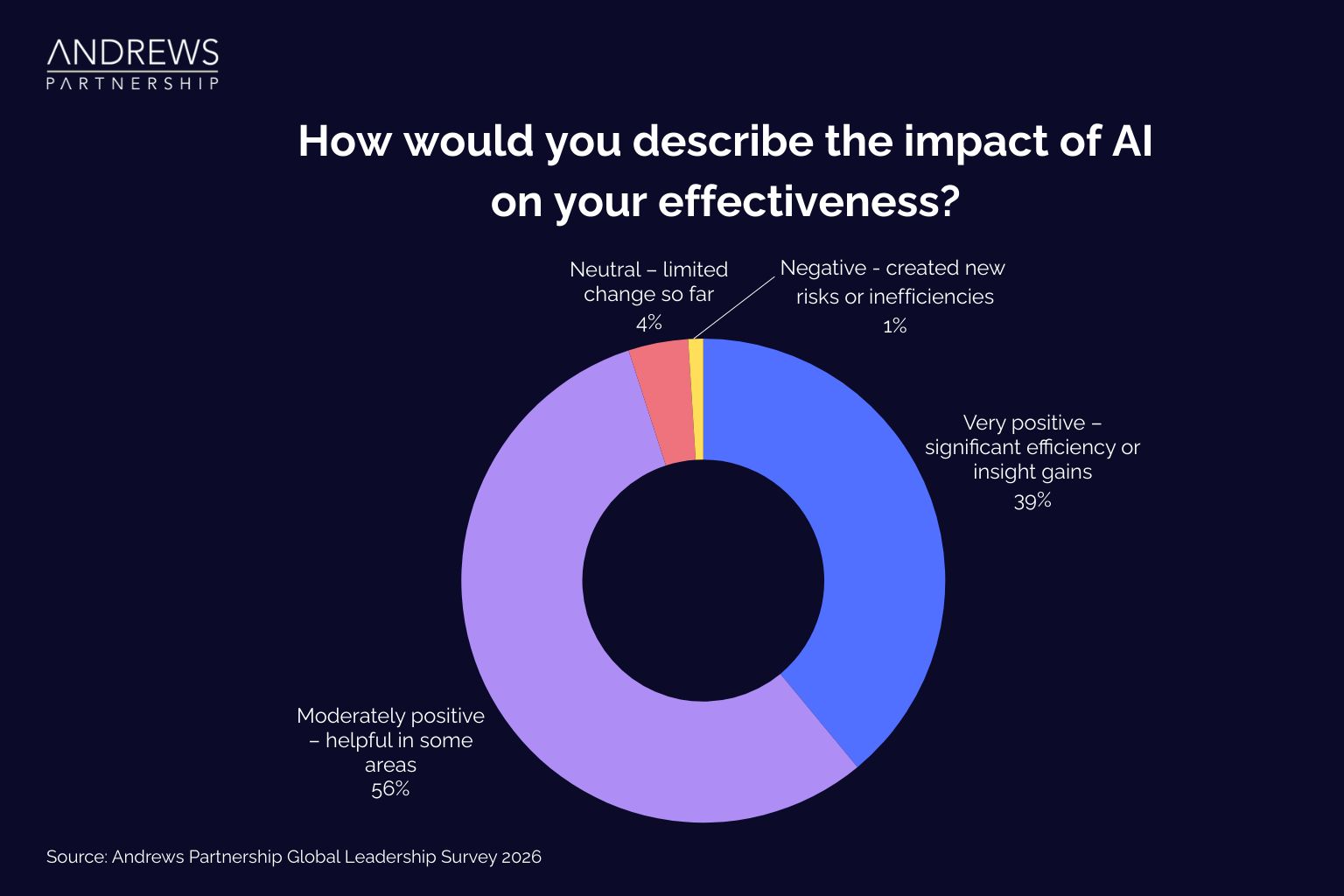
Alongside structural change, reputation teams are rapidly integrating AI into their work, with 91% of respondents saying their teams are using AI tools. Adoption across the profession is now widespread and the verdict on impact is positive: 95% describe AI as having a beneficial impact on their effectiveness, with only a handful reporting neutral or negative outcomes.
How would you describe the impact of Al on your effectiveness
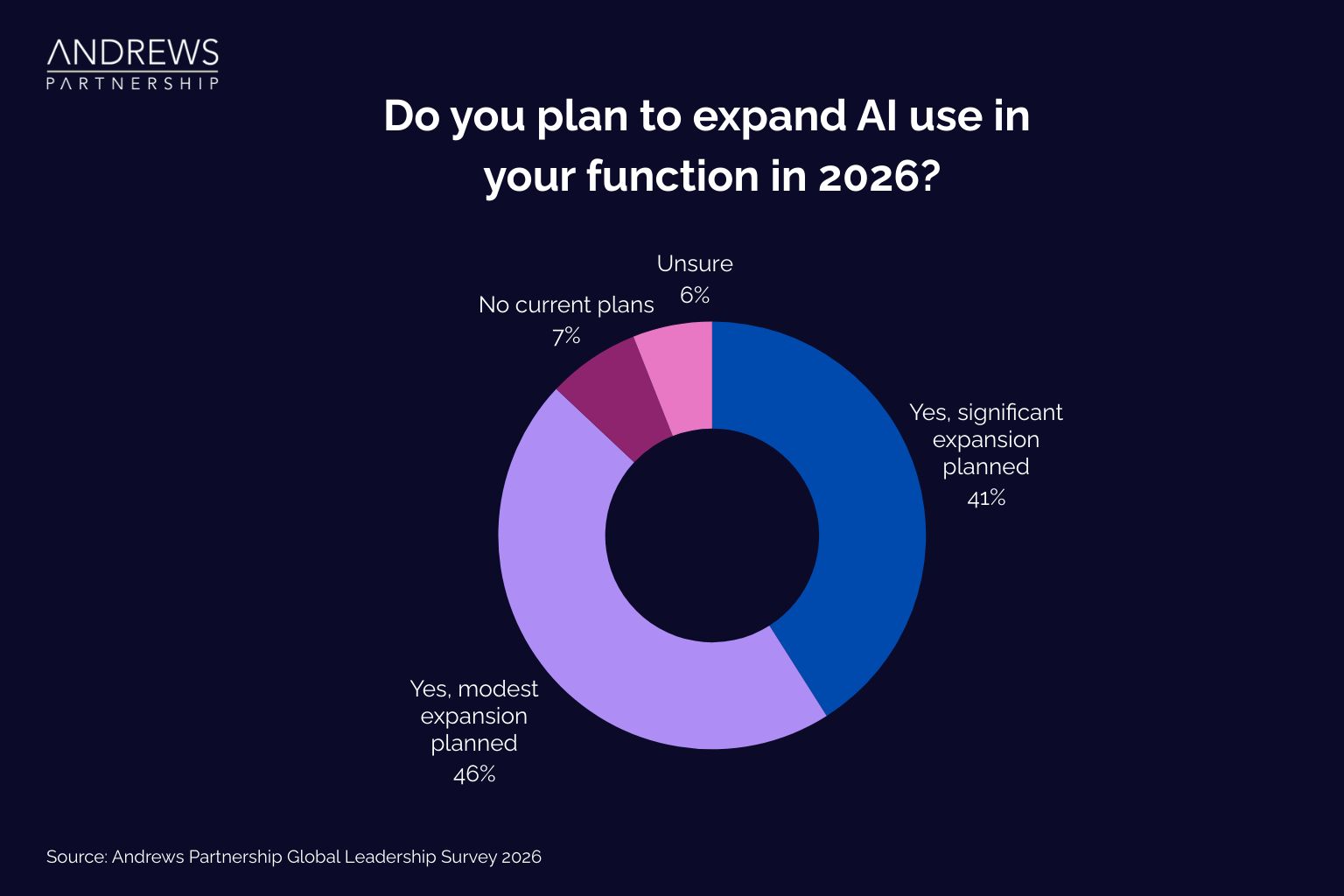
Unsurprisingly, almost 9 out of 10 respondents said they planned to expand AI usage in 2026, with 41% saying the expansion would be significant.
Do you plan to expand AI use in your function in 2026
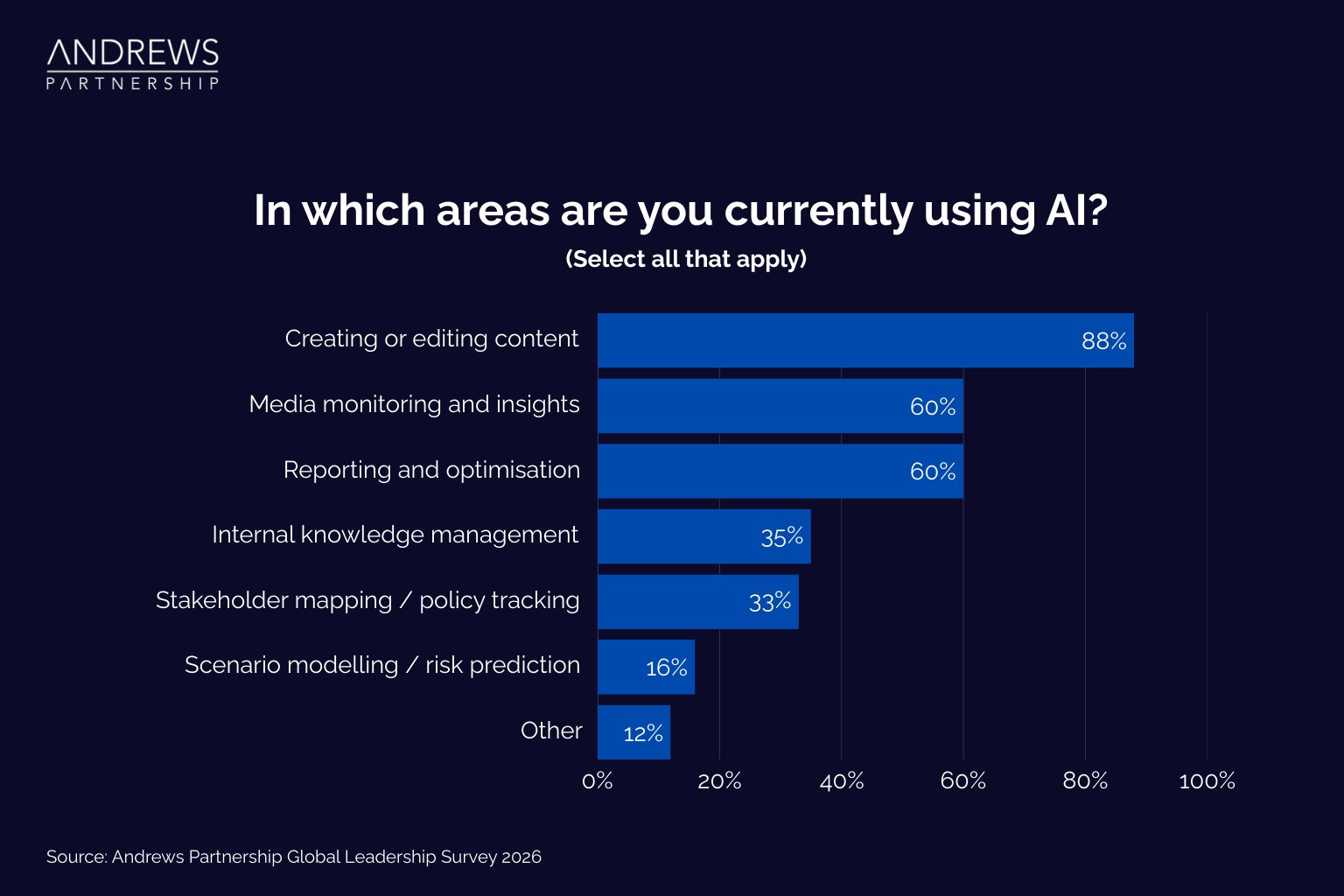
When it comes to how AI is being used, the data reveals a profession mid-transition: AI has taken hold most firmly in the activities where volume and speed create the greatest pressure. Content creation and editing leads adoption at 88%, reflecting the relentless demand for material across channels – but perhaps also raising a question about where human editorial judgment now sits in the workflow.
Media monitoring and reporting and optimisation follow, with each at 60%, suggesting that AI is increasingly shaping not just what teams produce, but how they measure and explain their impact to leadership.
In which areas are you currently usina Al
Less mature, but more telling, is where adoption remains low. Only 16% are using AI for scenario modelling and risk prediction – the activity most directly connected to the strategic value that reputation functions must offer. Stakeholder mapping and policy tracking sits at 33%. These underleveraged areas are precisely where AI could most credibly elevate communications from an execution function to a genuine intelligence function.
The “other” responses from respondents add further texture: leaders are beginning to use AI as a thinking partner – to stress-test ideas, critique drafts and model executive communications – pointing to an emerging use case that sits above task automation.

A powerful tool, but not without risks

Despite widespread adoption, respondents highlighted significant challenges associated with deploying AI effectively.
Governance remains a major concern. An APAC-based leader in the technology sector described the situation bluntly: “Many orgs are waiting on proprietary internal tools and policies, but in the meantime have to rely on improperly governed public LLMs. It’s like the Wild West of ‘digital’ all over again.”
Others raised concerns about poor implementation. A China-based communications lead in financial services warned of “People embracing bad AI writing, not checking AI-generated work adequately or blindly trusting it.”
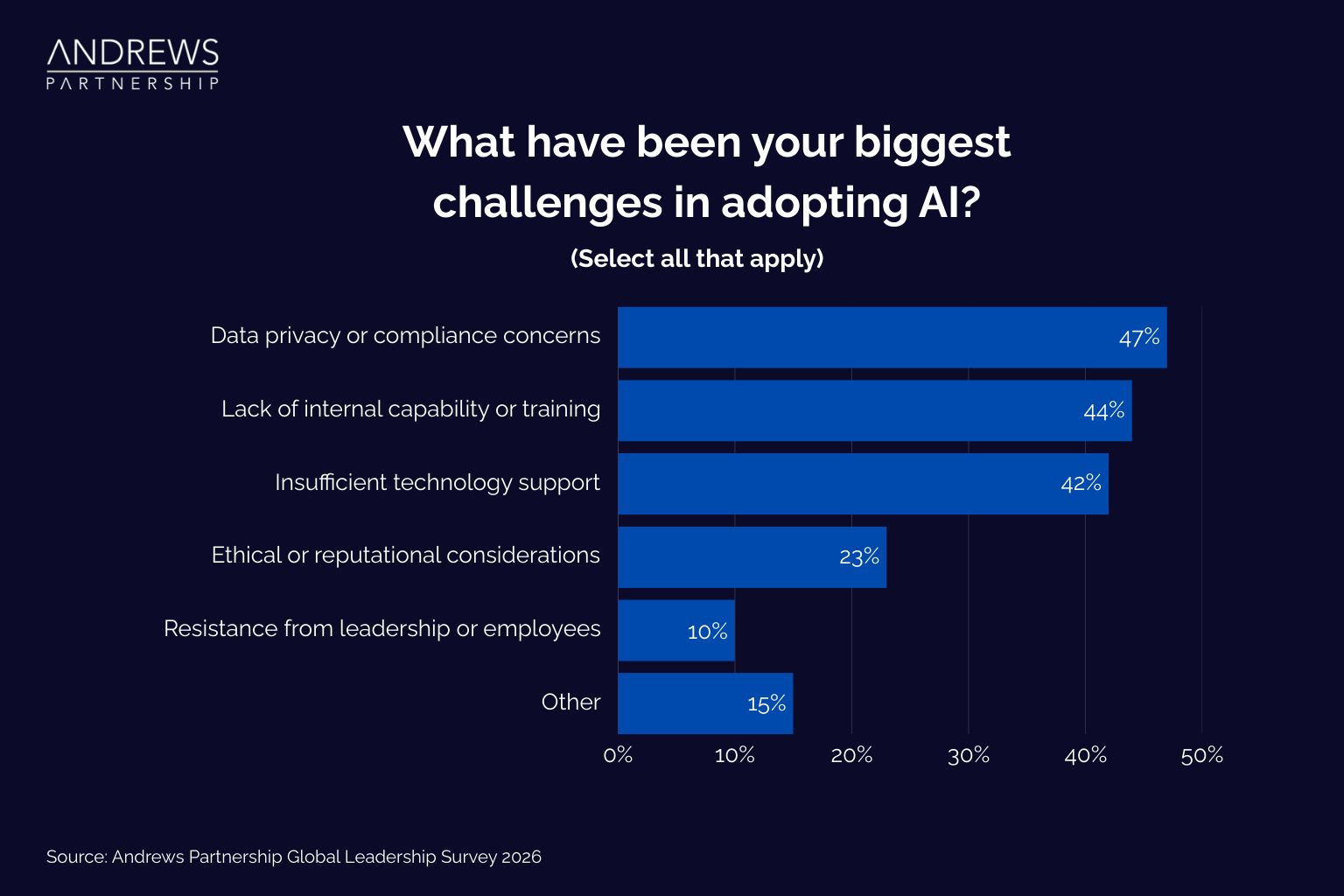
These concerns are reflected in the survey data: data privacy and compliance, lack of internal capability or training and insufficient technology support are the most commonly cited barriers – pointing to a profession where adoption has outpaced the infrastructure, skills and governance needed to support it.
What will have the greatest impact on your function in 2026

Finding the AI “sweet spot”

Perhaps most strikingly, many respondents emphasised that technology alone will not dominate the future of the profession. An APAC-based communications leader in the media industry described the challenge as “Finding the sweet spot between human and artificial intelligence that is complementary and symbiotic.”
Others warned that misuse of the technology can expose weaknesses in professional capability. As a European corporate affairs leader in finance put it, the risk lies in “The misuse of it by people who do not have the basic writing skills and cannot contextualise the core message or link it to the overarching strategy.”
Another respondent highlighted the importance of human judgement, describing her major challenge in 2026 as convincing leaders that “with a huge focus on AI, empathy must still guide decision making.” In other words, while AI may transform workflows, it is also increasing the premium on the human capabilities that technology cannot replicate.

Influence-in-the-age-of-AI

Download a pdf version of the report

Shift 3: Strategic reach and influence is growing

The pressures reshaping the profession may, paradoxically, be creating the conditions for its greatest opportunity. As trust, reputation, stakeholder engagement and regulatory risk move to the centre of organisational strategy, ambitious reputation leaders are seizing the moment.
Geopolitics, regulatory complexity and reputational risk are not just challenges to be managed; they are career catalysts, elevating the function and the people who lead it.
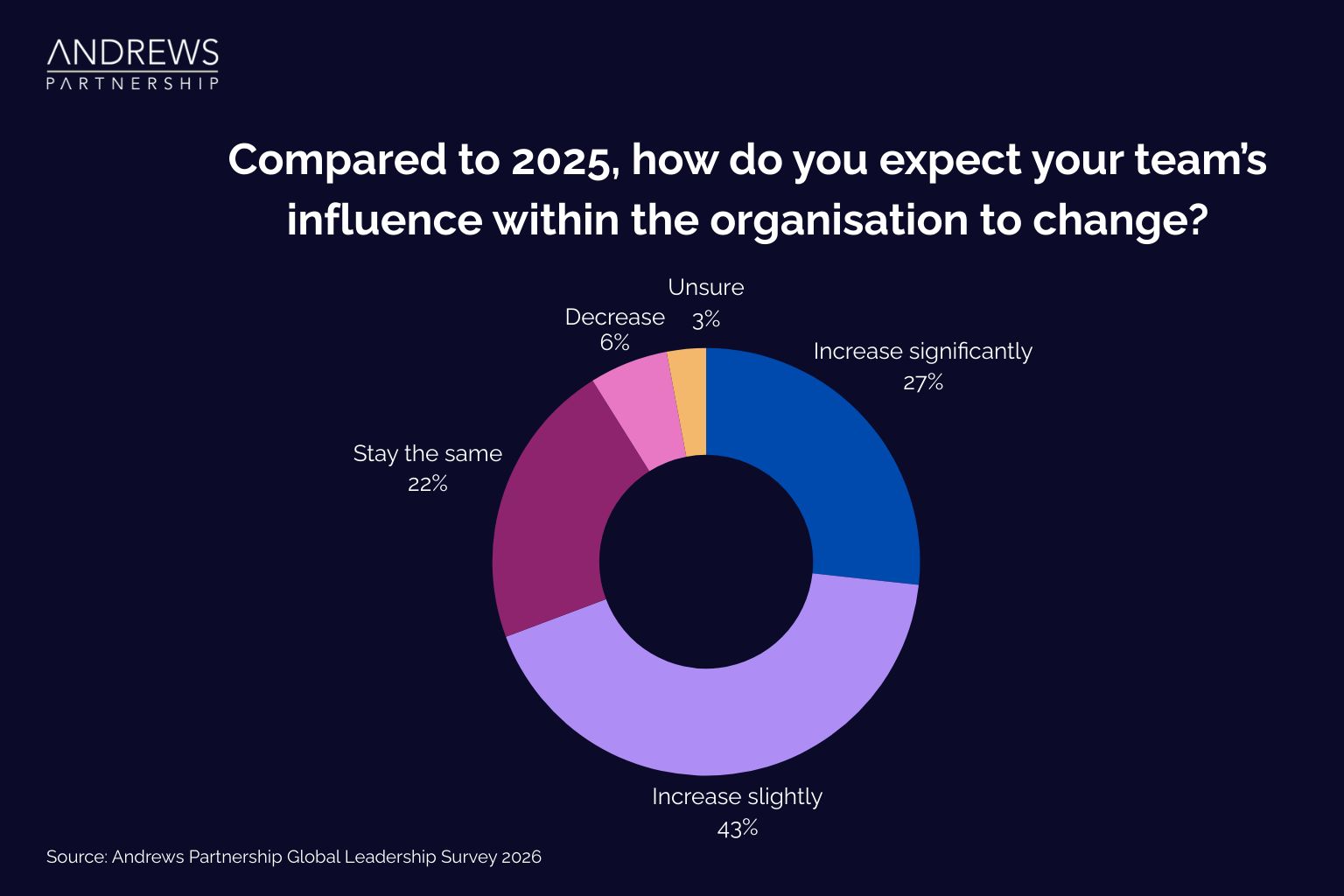
The data reflects this shift. Over two-thirds (70%) of reputation leaders expect their influence within their organisations to grow this year, with 27% anticipating a significant increase. Only 6% expect a decline – a striking vote of confidence from a profession navigating considerable uncertainty.
Compared to 2025 how do you expect your teams influence within the organisation to change

A seat at the table

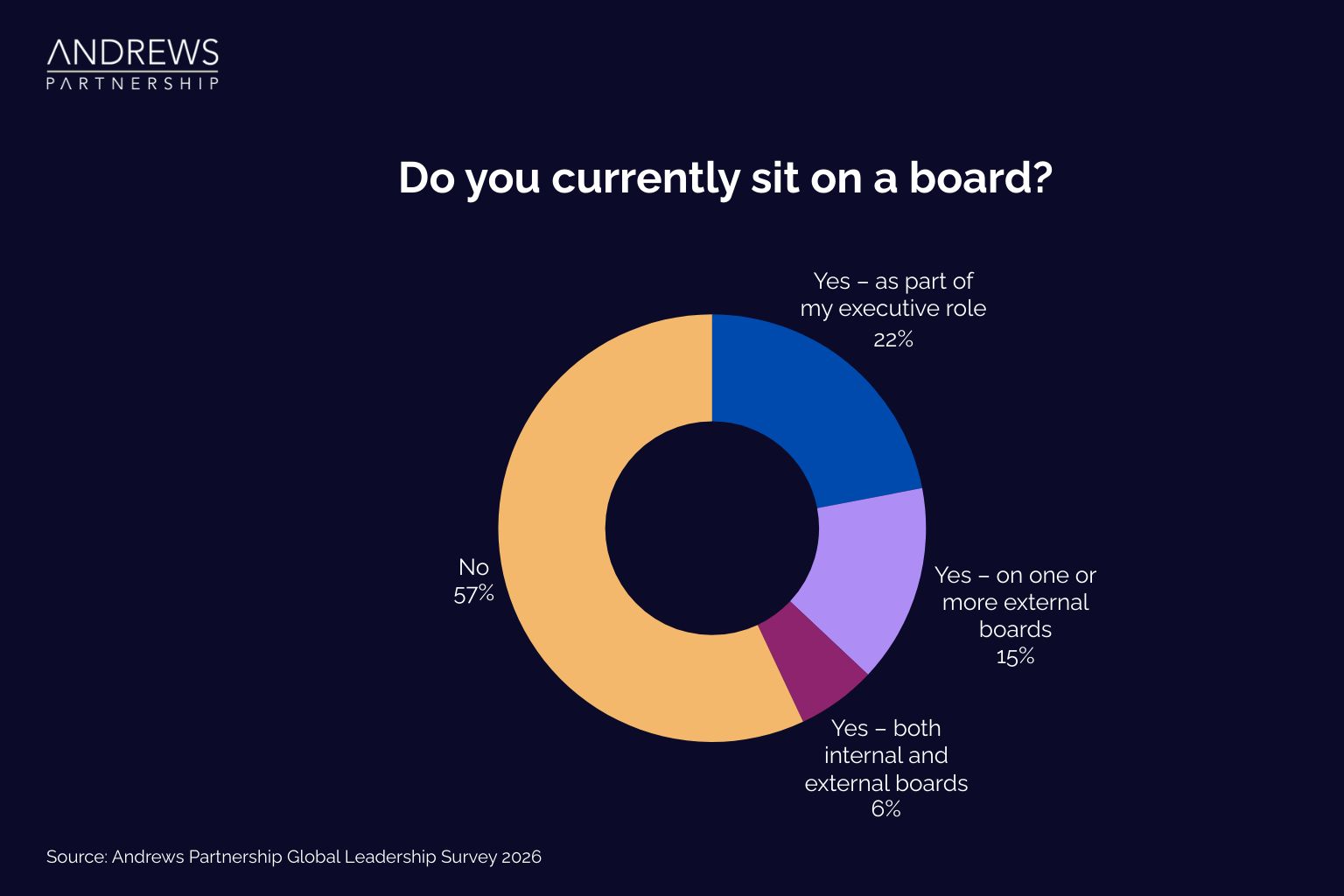
That confidence has a structural dimension. Over 40% of respondents now hold board roles – a clear signal that reputation and risk have become issues organisations want represented at the highest level.

As illustrated by our boardroom pathways series, CA leaders have never been better positioned to serve on boards and doing so builds valuable networks, enhances strategic thinking and strengthens credibility.

Do you currently sit on a board
As one respondent put it, the defining capability for 2026 will be the “ability to build trust and influence senior stakeholders, especially in moments of crisis or when decisions are being deliberated [and] to bring corporate reputational risk discussions into the boardroom.”

Beyond the boardroom

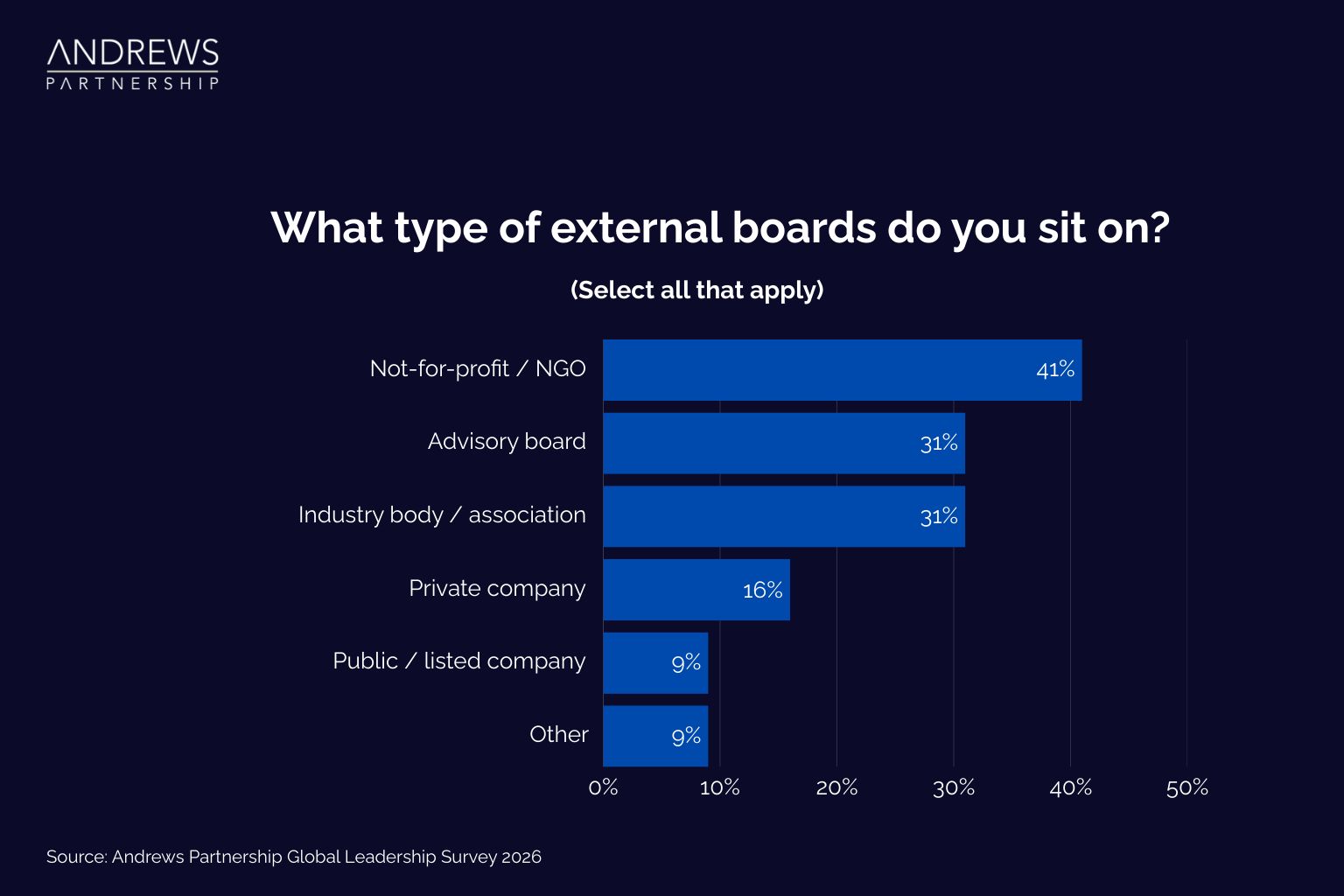
Board engagement extends beyond internal structures. Among those sitting on external boards, not-for-profit and NGO boards and industry bodies are the most common, reflecting the value placed on reputation leaders who can navigate complex stakeholder environments and build influence across sectors.
What type of external boards do you sit on?
That external reach matters because, as respondents described, influence operates in multiple directions simultaneously. The most effective reputation leaders are positioning themselves not just as advisers to leadership, but as connectors between their organisations and the wider environment.
The question is no longer whether reputation leaders belong in the boardroom – increasingly, they are helping to shape what happens there. What will determine who thrives is the quality of the distinctly human capabilities they bring: judgement, influence and strategic vision. That is the focus of the next shift.

Shift 4: Leaders are doubling down on the skills AI cannot replicate

As AI reshapes what reputation teams do, it is also clarifying what only humans can do well. The most prized leadership qualities in 2026 are not technical, they are deeply human.

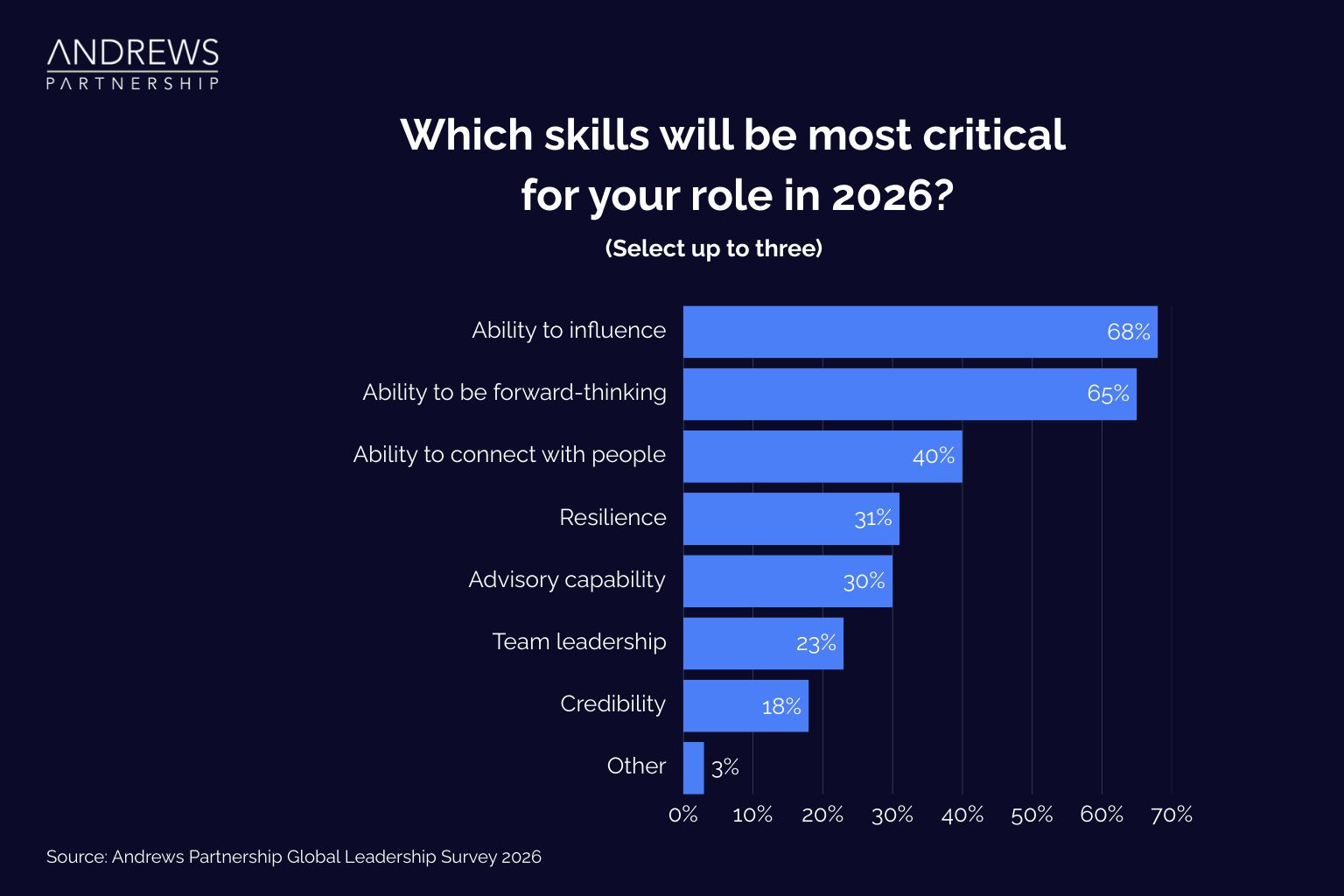
When asked which skills will be most critical for their role this year, respondents ranked the ability to influence first, followed by being forward-thinking and the ability to connect with people.
Resilience, advisory capability, team leadership and credibility complete the picture. Taken together, they describe a leader defined not by what they know, but by how they think, how they read a room and how they influence people.
Which skiLLs will be most critical for your role in 2026

The human-AI balance

The same leaders who prize these human qualities are also aware that mastering AI is a critical skill but one that does not replace human capability. As one respondent observed, “With the rise of AI, it is important to ensure that corporate affairs and government affairs are providing real value – not things that can be easily replicated.”
The most effective leaders in 2026 will use technological fluency to create more space for human influence.

Influence, foresight and composure

Respondents were clear about what outstanding leadership looks like in practice. Success, several argued, will be defined by “the ability to anticipate risk, translate strategy into trust and reputation outcomes, and act as a credible early-warning adviser to CEOs and boards.” Another framed it in terms of presence under pressure: leadership in 2026 will belong to those “who can foresee emerging shifts, stay steady under pressure, and translate sharp strategic insight into decisive, well-executed action.”
These are not skills that can be automated. They have to be earned through experience, empathy and credibility, and the kind of sustained human relationships that no AI model can replicate.

What reputation leaders must prioritise in 2026

The shifts outlined here converge into a pressing question for every reputation leader: are you positioned to lead, or positioned to follow? Here is where to focus:

Strengthen strategic influence

Board presence is growing, and leaders who can shape decisions at the top – not just advise from below – will define the next generation of the profession.
But personal board ambition is only part of the picture. Equally important is how you design your function: the right structure, reporting lines and remit for your industry and organisation. Benchmark against best practice and be willing to challenge whether your current model is fit for the influence you want to have.

Invest in foresight

With geopolitical instability and regulatory change both accelerating, the most valuable reputation leaders will be those who see risk coming before it arrives. Adept horizon scanners help their organisations stay ahead by spotting emerging risks and opportunities before they land.
A well-prepared and flexible approach to crisis communications alongside time dedicated to proactive scanning and a clear method for assessing and grading risks as they emerge are the hallmarks of an agile, future-focused leader.

Move AI up the value chain

AI is already transforming how functions operate and leaders who deploy it thoughtfully will move faster and free up capacity for the work that’s uniquely human.
But our data points to an opportunity being missed: while most teams are using AI for media monitoring and content production, far fewer are applying it to scenario modelling – which would directly strengthen their foresight – or to stakeholder mapping and policy tracking, where it could help functions stay consistently on the front foot.

Lead through uncertainty with composure

In a year of compounding disruption, the leaders who stand out will not be those who react fastest – but those who advise with clarity and credibility, and hold their nerve when others don’t. That requires both personal and functional resilience. Knowing your limits, giving yourself permission to say no, and actively role-modelling that behaviour as a leader are important steps in guarding against fatigue and burnout.
Protecting time for proactive thinking – and simply for recovery – creates the conditions to lead well under pressure. And by building systematised processes and a proactive approach to adversity into how their teams operate, leaders can ensure their functions are better equipped to navigate whatever comes next.

Latin America

China

Hong Kong

Europe

Broome Yasar Partnership

Australia

Africa

Asia

Singapore / SEA

Hong Kong/North Asia